Sadly though, after some storage over the winter, I have discovered that the batteries for both the drone and its controller now seem to be unable to take a charge. I did think that this could happen for the controller, as the battery cannot be easily removed from it - but the drone battery pack is removable for recharging and storage. It was disconnected from the drone when it went into the cupboard in December, so I am a little unsure as to why it is behaving this way...
I am going to start with what I think is the easy win right now, the controller.
 |
| Partially disassembled controller |
The first thing we need to do is extract the battery from within the controller itself. It sits within a cage that also has the antenna hot glued to it. When I first rescued this drone, the controller had these big, flat, folding antennas on each corner. Once I got into the controller itself, I discovered that they were ornamental - they were just pieces of plastic, so I took them off and binned them.
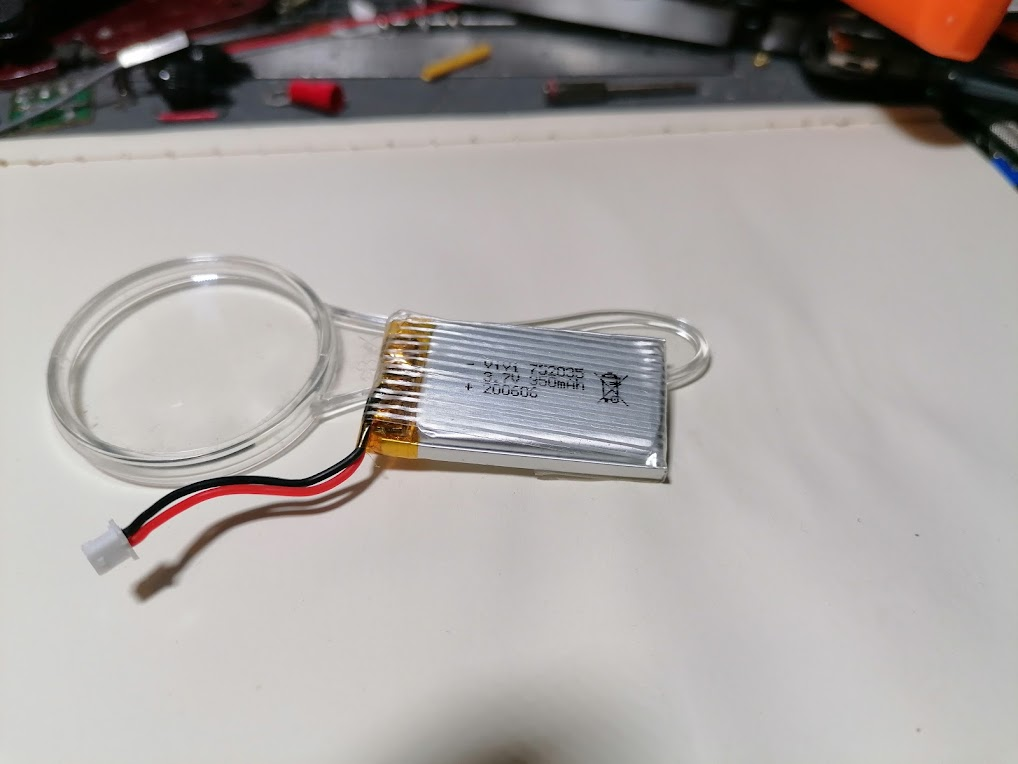 |
| The controllers internal batter |
After measuring the battery on the meter, I was very surprised to discover see 4.26 volts come up on the display. So much so that I measured it again on a different meter - and got the same measurement again. This is very strange, one of the features on the controller is a strip of LED's that provide a battery status. When connected to the power, they also act as a charge indicator. Before opening the controller, the LED's were flashing in a specific pattern, but with only two of them lit. As one of them was orange, I assumed that this was the charge/on light.
This means that it might not be an issue with the battery charging in the controller, it could indicate a larger problem with the controller itself. I dont know if these types of battery can be "over-charged", or if the existing battery is damaged, so its probably a good idea for me to go ahead and replace it any way. And if I am going to replace it, why dont I increase the battery capacity at the same time? On the original battery I got about 20 minutes of flight time. The drone itself can last a little longer, but having a higher capacity battery on the controller would be incredibly useful.
Going through my current battery collection, I discovered a 3.7 volt 300mAh which shares an almost identical physical configuration to the original battery. However it is a lower capacity battery at 300 mAh, which would mean even less use time on the controller itself.
But, I have quite a few of these batteries, so why not use more than one to increase the capacity from 300 mAh to 600 mAh?
In pretty much all cheap electrical consumer products, we see multiple batteries being used. Typically these are an even numbered combination of AAA, AA or D cell batteries. These batteries normally provide something between 1.2 and 1.5 volts, however the devices they power often require voltages higher than this or capacity that exceeds that of one single cell.
This is why we have to put batteries in these devices in specific combinations, and each device will require either one of two configurations, those being parallel or series. Connecting batteries in series increases the available voltage, so connecting six AA cells in series would give you 9 volts, depending on the cells. Connecting the same number and type of batteries in parallel would give you a voltage between 1.2 - 1.5, depending on the cells, but the capacity will have increased six fold.
To connect two or more cells in parallel, you simply connect the positives to the positives and the negatives to the negatives. With this done, you have increased the capacity by creating a battery pack. To connect the batteries in series, you connect negative to positive etc. Once done, you will have increased the voltage by again creating a battery pack. This is the reason why we place batteries in devices pointing in a specific direction.
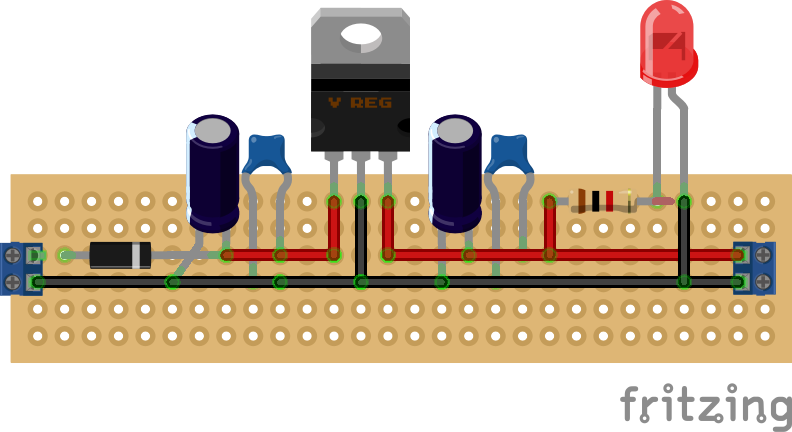
For my purposes though, I will be connecting two of my 300 mAh batteries in parallel for the reasons described above. The following image best describes what I need to do in order to achieve this:
 |
| Connecting batteries in parallel with strip board |
 |
| The completed battery board ready to go into the controller |
 |
| the battery board and batteries installed in the controller |
The battery is marked as 11.1 volts with a capacity of 1600mAh. It also states that it can deliver 17.76 Wh of power. These are pretty capacious batteries for two reasons - they supply power both to the avionics and to the propellers. The propellers will use the majority of the available power for achieving flight.
 |
| USB meter used to monitor power draw |
 |
| The exposed battery pack |
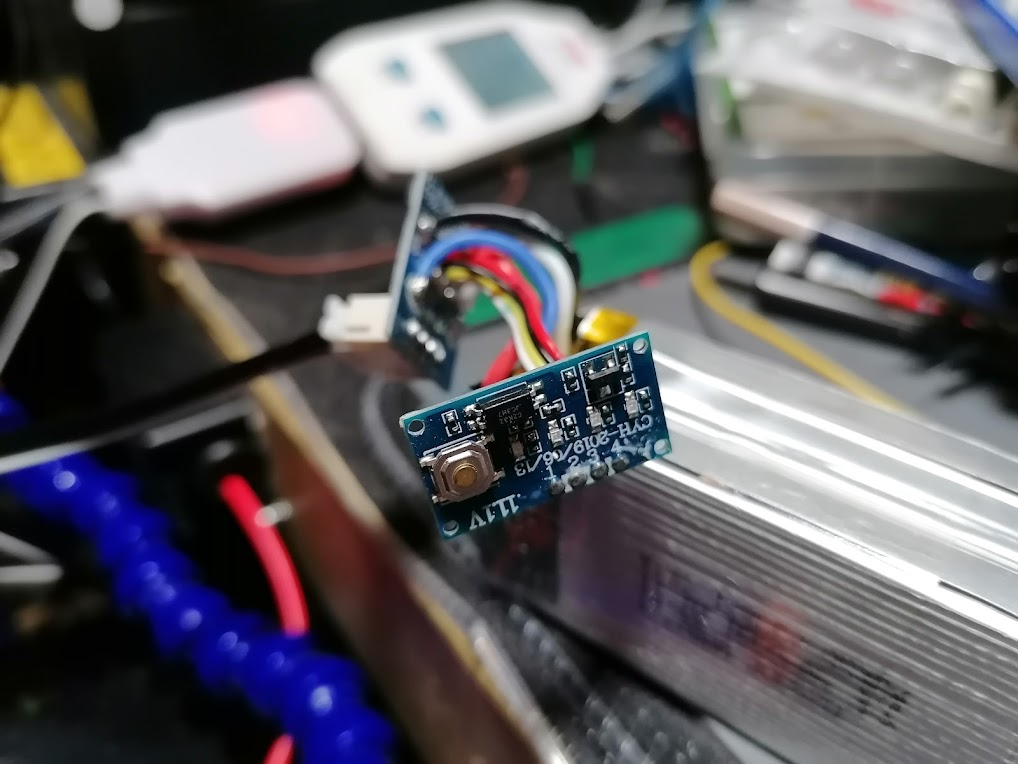 |
| The battery packs circuitry |